Currency

-
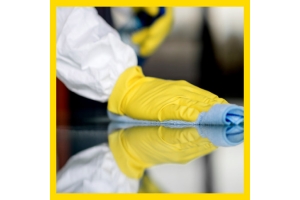
April 21, 2025Abrasives are commonly used in metalworking, the manufacturing and automotive industries, woodworking, and other industrial processing applications. However, even with some recent improvements in the tools and products available, using abrasives can still be hazardous. Workers who use these materials must be trained on the potential hazards and equipped with the appropriate PPE and other protections.
Conducting a thorough risk assessment for workers who use abrasives is the first step toward understanding all the risks involved with abrasive usage. Once the risks are known and documented, the next step is figuring out how to help reduce or even eliminate exposure where possible. Nick Manor, an expert in abrasives and safety at 3M, explained the most common of these hazards, as well as some possible ways to help reduce worker risk.
Hazards of Using Abrasives
Airborne Particulates
Abrasive activities often produce high volumes of dust. Some dust particles, -
February 24, 20255 ways to use tech to enhance Total Worker Health
How to boost worker safety, improve your bottom line, and help your team spend their time where it counts.
Modern workplaces are becoming more complex every day. Workers seek meaningful work and a good work-life balance, while employers juggle organizational needs with employee well-being. It’s more crucial than ever to look after your people by prioritizing health and safety.
Total Worker Health is an integrated approach that addresses traditional safety hazards alongside factors like mental health, workload, and team dynamics. This holistic approach helps keep employees safer and happier, leading to better business outcomes.
What is Total Worker Health?
Total Worker Health (TWH) is an initiative developed by the US National Institute for Occupational Safety and Health to create -
May 20, 2024Isolated and at Risk: Why Lone Workers Are More Vulnerable
Lone workers are more vulnerable and less visible. That’s why safety professionals need to go the extra mile to make sure all employees, including those who work out in the field or by themselves, have a safe working environment.
In the summer of 2015, a worker died from acute methylene chloride exposure while repairing a bathtub in a public housing complex in Cleveland.
The 30-year-old was working alone at the time. His body was discovered by a resident upon returning home. This fatality could have been avoided if his employer had provided adequate protection and training, according to the Occupational Safety and Health Administration (OSHA).
"This man died tragically and needlessly," said Howard Eberts, OSHA's area director in Cleveland in a press release following the incident. "OSHA recommends alternative, less hazardous chemicals or methods be used to eliminate exposure to methylene -
May 20, 2024Warehouse Worker Protection Act Introduced in Senate
While Teamsters applaud bill, Wholesalers Distributors association opposes it.
On May 2, Senators Ed Markey (D-MA), Tina Smith (D-MN) and Bob Casey (D-PA) introduced The Warehouse Worker Protection Act. In the coming weeks a bipartisan House version of the bill is expected to be introduced.
This bill would become a federal standard as there are similar laws in California, New York, Washington and Minnesota.
The aim of the bill, as characterized by a release from the Teamsters, is to hold “Amazon accountable for its dangerous safety practices and abusive production quotas.”
The bill will require large warehouse employers to disclose quotas to workers, The Teamsters note that this requirement would “prevent those quotas from interfering with workers' health and safety, -
September 12, 2023Back to Basics Foot Protection
Personal protective equipment (PPE) is a crucial factor in many industries for keeping employees safe. There are different standards for each piece of equipment, such as helmets, harnesses, goggles, and gloves, laid out by OSHA and other regulatory agencies. OSHA provides guidance on foot protection specifically, along with the corresponding ANSI standards.
OSHA’s standard
To meet OSHA’s general requirements for foot protection, the employer must ensure that each affected employee uses protective footwear when working in areas where there is a danger of foot injuries. This danger could come from falling or rolling objects, or objects that could pierce the sole of the shoe.
Employees whose work involves exposure to hot substances, or corrosive or poisonous materials must have protective gear to cover exposed body -
January 24, 2023Nine topics every professional should pay attention to
1. Harassment
Merriam-Webster named “Gaslighting” the word of the year. In the ever-expanding wake of Canada’s Governor General resigning over allegations of harassment, more high-profile cases are appearing. Hockey Canada’s board of directors resigned after mounting pressure and calls for answers after evidence emerged of cover-ups and payouts for sexual assault claims. Gymnastics Canada’s funding was frozen when hundreds of gymnasts signed a petition about exposure to a toxic culture, and gymnasts came forward asking the government to step in. The military has had consistent and disturbing cases of harassment and sexual assault. The list goes on. The problems are real, and organizations are being caught out.
Many organizations have inadequate processes and guidance for -
January 24, 2023For many businesses, daily activities necessitate the use of hazardous substances. To use and store them safely, it is critical to recognize the risks they pose and to meet the highest levels of workplace safety. Occupational safety protocols must therefore account for all hazardous substance handling, storage and comprehensive risk management.
In the UK, such occupational safety precautions are governed by the Control of Substances Hazardous to Health (COSHH) Act. Following an annual review of workplace safety, COSHH emphasizes the need of meeting and routinely refreshing safety procedures in all businesses.
In addition to meeting regulatory safety standards, we will explain below how to correctly store and label hazardous substances in the workplace, as well as outline the safety procedures and regulations you should implement to keep all those on site safe. -
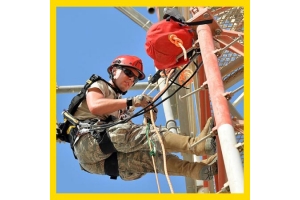
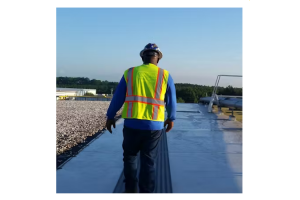
January 24, 2023For the eighth time since 2016, federal safety inspectors found the owner of a Martin, Ohio roofing company exposed roofers and other workers to the construction industry’s leading cause of death – falls from elevation – by failing to provide them with fall protection equipment and hazard training.
Altogether Roofing LLC and owner Mike Krueger now face $300,144 in penalties after a U.S. Department of Labor Occupational Safety and Health Administration inspector observed eight employees working at heights up to 20 feet without fall protection while atop a Maumee residence on June 22, 2022.
Following the June inspection, the agency cited the contractor for five violations – three willful, one repeat and one serious – for exposing workers to fall hazards, failing to use ladders correctly, lacking an accident prevention program, failing to provide training on ladder usage -
January 24, 2023The study, which used data from over 4,000 journey level plumbers, examined workers’ compensation claim rates.
Can workplace safety be improved by apprentice training? A new study published late last year shows that there may be a relationship.
The study, from the Washington State Department of Labor & Industries’ (L&I) Safety and Health Assessment and Research for Prevention (SHARP) Program, looked at data on 4,036 journey level plumbers (JLP) from 2000 to 2018.
The workers’ compensation claim rates of those who finished apprentice training were 31 lower than those who lacked apprentice training, according to an L&I news release. The adjusted estimates claim rate for JLPs with apprentice training was 73.1 per 1,000 full-time equivalent. For those with no apprentice training, it was 106.4 per 1,000 full-time equivalent.
“This study -
January 18, 2023Slip, trip and fall injuries are unfortunately not uncommon in many industries, including mining.
In 2021, there were 771 reported slip and fall injuries in the mining industry out of a total of 3,421 injuries, according to the National Institute of Occupational Safety and Health (NIOSH).
Many factors can contribute to slips and falls when working in a mine, like equipment, walkways and the conditions. In honor of National Miners Day, which is recognized on December 6, let’s look at ways to prevent the second leading cause of nonfatal injuries resulting in lost time in mining.
Working around or with equipment, especially mobile equipment, can lead to injuries. The most common equipment to cause slips, trips and falls at a mine are “large trucks (haul trucks), loaders and dozers,” NIOSH reported.
How can employers keep workers safe
Recent Posts


Popular Posts