Currency

-
May 25, 2019The GCCs’ construction industry continues to grow. According to a survey in April 2019 by law firm Pinsent Mason, construction companies in the area expect to receive more orders this year than last, with Saudi Arabia identified as being the leading market to deliver growth.
-
May 25, 2019Make the proper PPE choices for your employees working in confined spaces.
-
May 25, 2019Departments should proactively check with members about gear fit, not expect firefighters to complain when it doesn’t
-
May 25, 2019To prevent accidents as prevalent as those related to the eyes, taking a predictive approach to planning is key.
-
May 18, 2019In EMT class and bloodborne-pathogens training, we’re taught to wear our gloves. Most EMS providers do so without thinking—they just pull them on as they exit their apparatus or approach a scene. They often carry extra pairs in their pocket or on their belt just in case.
Eye protection doesn’t seem to have the same sway. A 2016 study found its EMS usage varies based on department policy and personal preference. This article will review why eye protection for EMS is a sound idea and offer suggestions for how to be more consistent with wearing it.
Workplace Dangers
According to the American Academy of Ophthalmology, nearly 20,000 eye injuries occur at work each year.1 Further, nearly 90% of these injuries could be avoided if appropriate eye protection were worn. Granted, a majority of these injuries are industrial, rather than medical, yet EMS can find itself in nearly any situation rendering care.
According to the AAO, common -
May 18, 2019Metal fabrication is an integral part of many different industries, and it can be one of the most dangerous due to the tools and techniques necessary to complete each task. Metal shop injuries are often extreme and can be even fatal in some situations. Why is metal fabrication safety so important? What can shop owners and supervisors do to ensure their factory floors are as safe as possible?
Common safety problems
A company that doesn't focus on creating a safety culture or providing the correct personal protective equipment and training is failing its workers. Accidents in the metal shop frequently cause loss of limb or even death. What are some of the most common fabrication safety concerns?
- No safety guards: Most fabrication equipment comes with safety guards installed to prevent injuries, as well as an emergency shutoff switch and sensors to keep employees safe. Removing these safety measures makes the equipment inherently more
-
May 18, 2019Armed with a proper understanding of chemical exposure risks and available safety solutions, engineers can be confident in selecting the best personal protective equipment to provide reliable barriers to workplace hazards
There is a tendency to think about personal protective equipment (PPE) in the workplace in the abstract — as a requirement to be checked off, rather than a critical component of worker safety and often the last line of defense. Most organizations care deeply about safety, of course, but their understanding of PPE — especially PPE designed to protect against chemical exposure — can be limited.
That is a problem, because different chemicals react differently to different PPE materials, and even today, there are examples of well-meaning companies that provide the wrong PPE to workers handling various types of dangerous chemicals. Just last year, there was an incident in which a manufacturer discovered a gap in its PPE program only when workers suffered -
May 18, 2019New equipment, products, or chemicals might make the PPE that was perfect last year less than ideal for what you're doing now. It's also worth asking if any new OSHA rules affect the PPE you choose.
Innovations in Safety
Safety always comes first, so it's important to review the PPE you're using to see whether there's something that might protect even better. New innovations, improved technologies, and unique materials hit the market every year.
Manufacturers have begun creating gloves and other PPE with:
- higher cut resistance to meet the higher ANSI cut-levels that now go all the way up to A9
- better visibility, including high-vis safety gear with different colors and options to allow workers to be seen
- touchscreen compatibility so workers can keep their gloves on when using an iPad or phone—so no more forgetting to put them back on
- better palm coatings for extra grip
- higher cut resistance to meet the higher ANSI cut-levels that now go all the way up to A9
-
May 11, 2019AR/FR PPE goes through daily wear and tear rigors. Here are keys to ensuring the longevity of your investment.
In creating an AR/FR personal protective equipment (PPE) program, you should dedicate a fair amount of time researching, selecting and sourcing quality garments to protect your employees. Time is spent on the front end to make sure that the proper garment is designed in order to comply with industry standards and provide acceptable wearer comfort.
Once the PPE is determined, there is still an ongoing need to ensure the program is serviced—and serviced correctly.
For example, an employee will put an AR/FR garment through the rigors of his or her daily routine, which means that it will likely become dirty and soiled over a period of time. Rather than diminish an investment through improper care, it is key to clearly understand and appropriately implement maintenance programs to increase the longevity of the clothing or PPE.
-
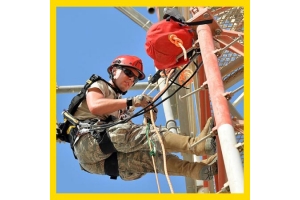
May 11, 2019According to the Occupational Safety and Health Administration (OSHA), falls continue to be the leading cause of fatalities in the construction industry. To help combat this sobering, but preventable, statistic, global safety equipment manufacturer MSA Safety Incorporated (NYSE: MSA) today announced that it will conduct free fall protection training sessions, from May 6 through May 10, during OSHA's annual National Safety Stand-Down.
As part of this week-long safety blitz – now in its sixth year – MSA will provide free, OSHA-compliant fall protection training demonstrations at construction jobsites across the U.S utilizing the company's fleet of mobile training vehicles. MSA's 50-person team of fall protection and confined space safety experts will highlight basic fall protection principles and necessary personal protective products through demos and hands-on training. Covered topics include
Recent Posts

Popular Posts