Currency

-
January 31, 2019Disposable respirators are one of the most widely used respiratory protection devices due to the ease of use and disposal as well as their reasonable prices. Unlike face masks, disposable respirators provide low breathing resistance and efficient protection against oil-based and non-oil-based particulates.
A new report focuses on the disposable respirator in global market, especially in North America, Europe and Asia-Pacific, South America, Middle East and Africa. This report categorizes the market based on manufacturers, regions, type and application.
Any disease can turn into an epidemic in the absence of proper preventive measures, improper sanitation, and lack of precaution. During major outbreaks of epidemic diseases, disposable respirators play a pivotal role in preventing and controlling the spread of airborne diseases. In addition, disposable respirators also assist in eliminating -
January 31, 2019How does human error affect safety in the electrical utilities industry?
-
January 31, 2019
OSHA is using alliances formed recently with both private and public sector organizations across the U.S. to get out in front of potential safety issues and focus on injury prevention rather than enforcement.
In Erie, Pennsylvania, OSHA and Turner Construction have formed a strategic partnership to promote workplace safety during the construction of a 200,000 square-foot, seven-floor hospital building. The goals: to educate workers, control or eliminate serious hazards, and establish effective safety and health programs.
In New Jersey, the Department of Labor and Workforce Development and its Industrial Safety Committee have signed a two-year agreement with OSHA aimed at guiding local businesses through the development and implementation of effective safety and health programs.
Another two-year agreement – this time in Montana – solidifies a partnership with the Montana Contractors Association through which OSHA will provide training and education programs -
January 31, 2019Powered hand drills can save workers a lot of time on the job, but caution is called for to avoid serious injuries. The Canadian Center for Occupational Health and Safety recommends following these tips when using powered hand drills:
- Ensure drill air vents are kept clear to maintain proper ventilation.
- Keep drill bits sharp.
- Clear the drilling area of all cords during use, and inspect cords for damage before each use.
- Disconnect the power supply before changing or adjusting drill bits or attachments.
- Ensure items being drilled are secured so they don’t move.
- Wear personal protective equipment, including safety glasses or goggles, or a faceshield.
Along with any list of “dos” comes a list of “don’ts.” When using a powered hand drill, never use a bent drill bit, and do not exceed the manufacturer’s recommendations - Ensure drill air vents are kept clear to maintain proper ventilation.
-
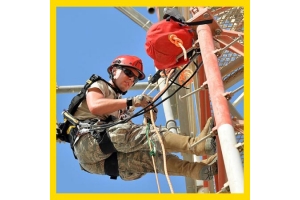
January 24, 2019If you're working at 6 feet or higher, you need fall protection.
-
January 24, 2019Without management commitment to safety, a company cannot achieve best-in-class results.
-
January 24, 2019The Golden Helmet award is intended to reduce accidents and work-related injuries.
-
January 24, 2019
What materials are respirators made from?
Filtering facepiece (dust masks) are generally made directly from a cloth-like filter material. Chemical cartridge/gas mask respirators can be made from a variety of materials. The most popular facepiece materials are silicone, neoprene, and rubber. In general, rubber and neoprene are rigid, durable materials. Silicone is usually preferred for its comfort, flexibility and ease in cleaning. Full-face respirators are available with strap harnesses or ratchet suspensions. The harness type can be worn under a hard hat, but ratchet suspensions are generally easier to adjust, making donning and doffing easier.
What optional features are available for respirators?
Various features are available to help you customize respirators to suit your employees and the specific hazards they encounter. For example, nose cups reduce lens fogging with full facepiece respirators and lens covers protect the lens -
January 17, 2019Fall hazards continue to be problematic in the safety industry.
-
January 17, 2019Safety leaders need to focus on the significant few things that most impact safety, rather than trying to do too much.
Recent Posts




Popular Posts